
How a Scalar Wave Therapy Session Is Structured in Professional Practice

Updated: Apr 15
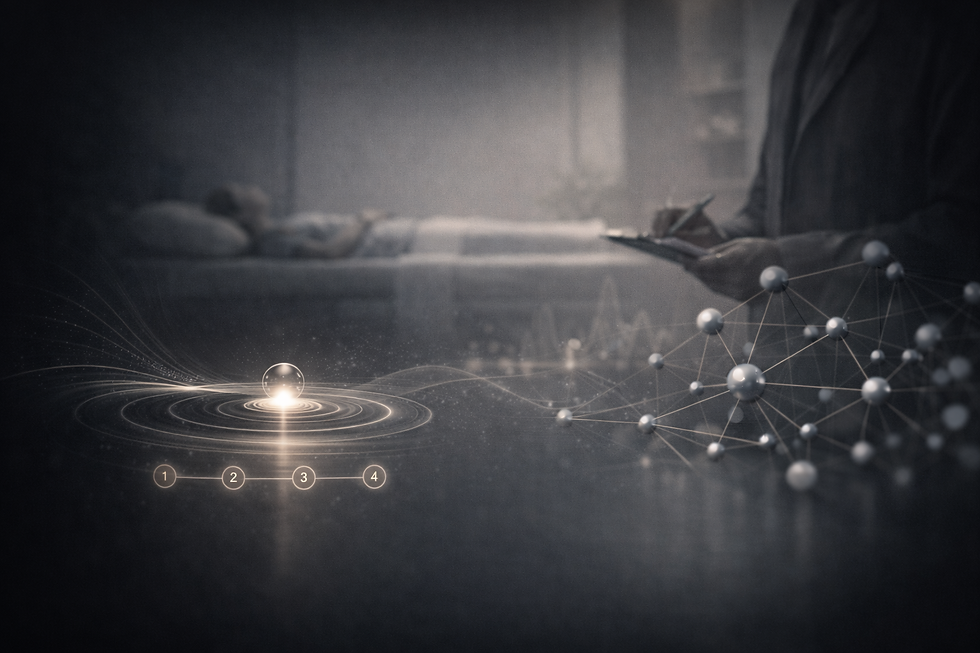
A professional scalar wave therapy session should feel structured, not improvised.
That is one of the clearest differences between a practitioner-guided system and a vague wellness experience.
On Scalar Wave Lab, the Lattice System is positioned as a non-invasive, practitioner-guided, structured system with training, guided setup, technical support, and a defined implementation path. The site also describes session use in a simple sequence: review the goal, prepare the system, apply the protocol, and support regulation, recovery, and balance.
That is the right starting point.
Because in professional practice, the session is not just about turning on equipment. It is about:
session logic,
practitioner control,
client understanding,
and consistent delivery.
Start with the role of the practitioner
A scalar wave therapy session is not meant to be machine-led. It is meant to be practitioner-guided.
That matters because integrative care is strongest when it is coordinated and centered on the person, not on a device alone. NCCIH defines integrative health as bringing conventional and complementary approaches together in a coordinated way within a whole-person framework.
So the basic rule is this:
The practitioner leads the session. The system supports the session.
That single idea improves clarity immediately.
The core session structure
A professional scalar wave therapy session can be explained in four stages.
1. Review the session goal
The session begins with practitioner review.
Scalar Wave Lab’s materials describe this first step as reviewing the client’s needs, current state, and session focus before the system is applied.
This is where the practitioner clarifies:
what the session is for,
what the client is reporting,
what the intended focus will be,
and how the system fits into that broader session context.
In patient-centered care, clear communication at the beginning of care supports informed participation and better decision-making. AHRQ describes communication as essential to patient-centered care and shared decision-making.
2. Prepare the system and room
After the goal is clear, the practitioner prepares the physical setup.
Scalar Wave Lab already describes this as selecting the right components, preparing the treatment space, and getting the system ready according to the protocol and session objective. It also states that installation, grounding, and first-use readiness are part of the setup pathway.
This stage includes things like:
room readiness,
component selection,
correct placement,
and grounding requirements.
3. Apply the session protocol
Only after the goal and setup are clear does the practitioner begin the session itself.
Scalar Wave Lab describes the Lattice System as using a mixed application approach, where some components are used for more general field-based application and others for more targeted work depending on the session goal.
That means the session is not random. It is guided by a defined use logic.
4. Support the session environment
The final stage is not “force an outcome.” It is to support a more coherent session environment.
Scalar Wave Lab consistently frames the system around supporting regulation, recovery, vitality, stress adaptation, rest, and physiological balance within practitioner-guided use.
That is an important distinction. The session is structured to support the body’s adaptive processes, not to promise a specific medical result.
What the client should expect
A professional session should be easy to understand.
NIH plain-language guidance says clear writing helps people understand what they need to know and is not the same as “dumbing down” information.
So client expectations should be explained in plain language:
the practitioner will guide the session,
the system will be used within a defined structure,
the session is complementary in nature,
and individual responses can vary.
That is much better than vague intensity or exaggerated promises.
What gives the session professional structure
A session feels professional when four things are present:
Clear intake logic
The practitioner understands why this session is being done.
Defined setup logic
The system is prepared intentionally, not casually.
Controlled session flow
The practitioner chooses the components and sequence according to the session goal.
Clear boundaries
The system is presented as complementary, not as a substitute for diagnosis or treatment.
That combination is what turns a modality into a professional offering.
Why session flow matters for authority
An authority layer is not only built with theory. It is also built with visible structure.
When a practitioner can explain the session in steps, the offering feels:
safer,
more credible,
easier to understand,
and easier to trust.
That is one reason AHRQ’s shared decision-making resources emphasize structured dialogue and meaningful conversation between provider and patient.
A session with structure signals professionalism.
A simple practitioner script
Here is a clean way to explain the flow:
“We begin by reviewing your session goal and current state. Then we prepare the system according to the protocol we’re using. During the session, I guide the process and use the system as a complementary, non-invasive part of the work. The goal is to support regulation, recovery, and overall balance within the session.”
That script works because it makes the flow visible.
It also keeps the practitioner in control, which is exactly how Scalar Wave Lab positions the system.
Where setup and grounding fit into the session
Setup and grounding are not separate from the session. They are part of session readiness.
Scalar Wave Lab states that grounding is part of the setup requirements for professional use, and the package includes the grounding cable and bronze rod.
So in real practice, the session begins before the client sits down. It begins when the room, equipment, and operating structure are prepared correctly.
What a session should not feel like
A professional scalar wave therapy session should not feel like:
guesswork,
a vague ritual,
an exaggerated sales event,
or a device running without practitioner logic.
That weakens trust.
A stronger session feels:
calm,
intentional,
well-explained,
and properly guided.
That is the difference between “using a device” and “delivering a professional session.”
The bottom line
A scalar wave therapy session is structured in professional practice when it follows a clear flow:
review the session goal,
prepare the system and room,
apply the protocol in a practitioner-guided way,
support a coherent, non-invasive session environment.
That is what gives the session logic.
That is what gives the practitioner control.
And that is what makes the system feel like part of a real professional practice.
Sources used
Scalar Wave Lab website.
NCCIH on complementary and integrative health.
AHRQ on communication and shared decision-making.
NIH on plain language.


Comments